Lift tables are foundational equipment in distribution centers. They eliminate manual lifting injuries, speed up packing and loading workflows, and maintain ergonomic positioning across shifts. BLS data shows Transportation and Warehousing had 77.1 musculoskeletal disorder cases per 10,000 workers — nearly three times the national average — making powered lift tables a strategic investment, not just a safety checkbox.
This guide covers the top lift table options for distribution centers, the key specs to evaluate, and what sets each brand apart for high-throughput environments.
Key Takeaways
- Lift tables serve multiple DC functions: packing station height adjustment, dock loading, conveyor integration, and pallet positioning
- Scissor lift tables (hydraulic and electric) dominate DC applications due to load stability, adjustable height, and conveyor compatibility
- Leading brands — Southworth, Advance Lifts, Presto Lifts, Bishamon, and Pentalift — cover the full range of DC capacity and footprint needs
- Key selection criteria: load capacity, collapsed height, lift range, power source, and ANSI MH29.1 certification
- Midwest operators can source, install, and service equipment through manufacturer-trained regional distributors like John Maye Company
What Are Lift Tables and Why Distribution Centers Rely on Them
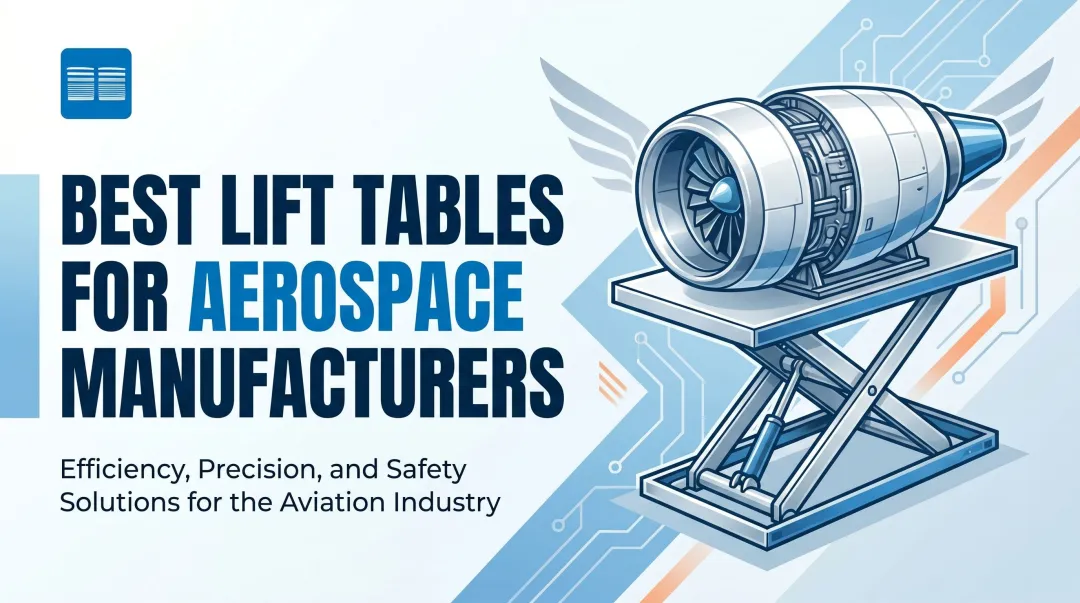
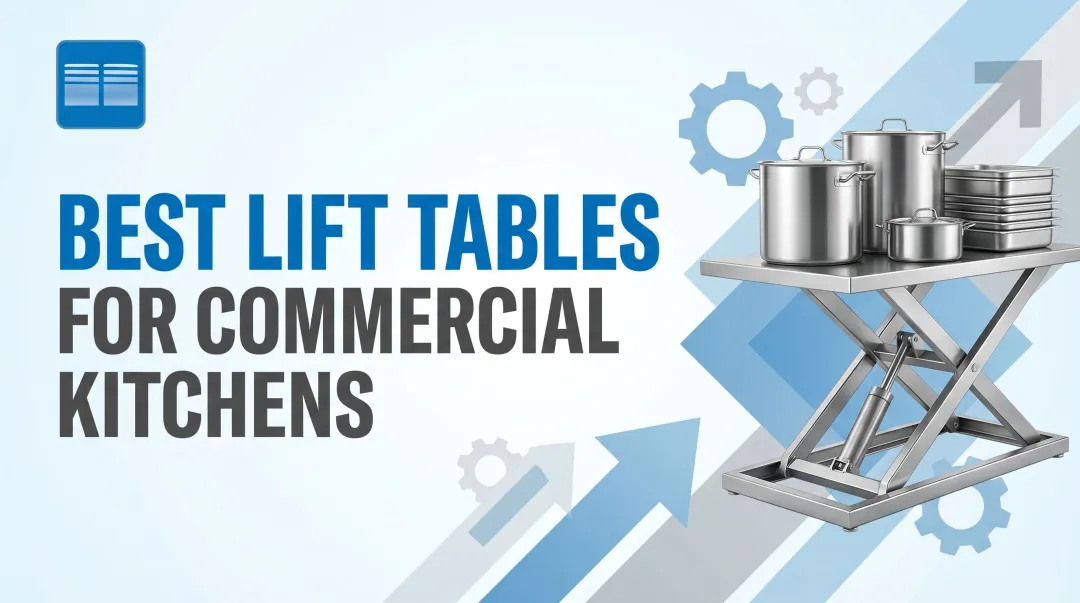
Lift tables are powered platforms that raise loads to precise working heights. They're available in stationary, mobile, and pallet-positioner configurations. Distribution centers use specialized models engineered for high-cycle repetition, tight aisle spacing, and dock-to-conveyor height bridging.
DCs face unique demands that make lift tables essential:
- High-cycle repetition across multiple shifts requires duty-cycle ratings far beyond general industrial use
- Space constraints in pick-pack-ship aisles demand low-profile entry without pit installation
- Height bridging between dock levels and conveyor lines requires precise platform travel
- OSHA ergonomic goals drive injury reduction programs where lift tables deliver measurable ROI
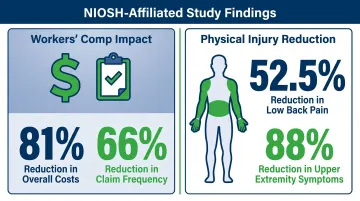
Research confirms the impact. A NIOSH-affiliated study found ergonomic engineering controls reduced workers' compensation costs per employee by 81% and claim frequency by 66%. For workers regularly handling loads over 50 lbs, material handling equipment cut low back pain frequency by 52.5% and upper extremity symptoms by 88%.
The models covered below reflect what actually holds up under the demands of high-throughput DC operations — evaluated on load capacity, duty cycle, ergonomic design, and fit for warehouse environments.
Best Lift Tables for Distribution Centers
Choosing the wrong lift table for a distribution center means downtime, ergonomic risk, or equipment that can't keep pace with multi-shift demand. Each brand below was evaluated on load range, DC-specific features, safety ratings, and suitability for high-throughput operations.
Southworth Products
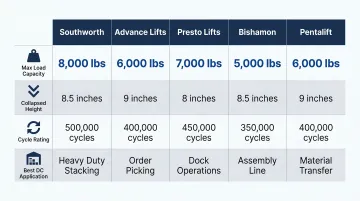
Southworth is a U.S.-based manufacturer specializing in scissor lifts, pallet positioners, and dock lifts built for heavy-cycle warehouse and distribution use. Their DC-focused models are engineered for continuous multi-shift operation, with Production Ready Lifts rated for 200,000+ cycles between major maintenance. Platform sizes are customizable and designed for conveyor line height matching. All Southworth scissor lifts meet or exceed ANSI MH29.1 Safety Requirements for Industrial Scissors Lifts.
Key Specifications:
| Specification | Range |
|---|---|
| Load Capacity | 550 lbs to 30,000 lbs (Backsaver Lite through L Series Cam Lifts) |
| Lift Height Range | Collapsed: 3-1/4" to 26" / Raised: up to 168" (High-Rise LSH Series) |
| Best DC Application | Conveyor integration, packing station height adjustment, high-cycle dock loading workflows |
Optional features include gravity conveyor tops, ball transfer tops, one-touch auto leveling for palletizing, and powered turntables. Velocity fuses are standard on hydraulic systems to prevent platform drop on hose failure.
Advance Lifts
Advance Lifts, based in St. Charles, IL, is one of North America's largest scissor lift manufacturers. Their catalog covers standard and custom units across a wide range of capacities and power sources — AC electric, hydraulic, or battery — making them a strong fit for DCs that need exact station-by-station configuration.
Their standard warranty covers 10 years / 250,000 cycles structurally, with HC Series (1,000,000 cycles) and UHC Series (3,000,000 cycles) options for high-demand environments. Expected service life runs 3–4x the warranty period when properly installed. All controllers are UL listed assemblies conforming to applicable ANSI codes.
Key Specifications:
| Specification | Range |
|---|---|
| Load Capacity | 2,000 lbs to 24,000 lbs (P-Series through HD-Series Double Long) |
| Lift Height Range | Collapsed: 6.5" to 12" / Raised: 30.5" to 72" |
| Best DC Application | Custom-configured order fulfillment workstations, modular assembly lines, heavy-pallet positioning at dock areas |
Patented Platform Centering Devices double or triple lift life. Custom options include position control with +/- .030" accuracy and multi-lift synchronization on a single power unit.
Presto Lifts
Presto Lifts has manufactured ergonomic lift tables and material handling equipment for over 50 years. Their portfolio spans stationary scissor lifts, tilters, and pallet positioners — with an accessory lineup that stands out for pick-pack and inspection applications.
Tilt tops (30°, 45°, 90°), turntables, and roller tops make Presto tables well-suited to high-touch fulfillment stations. The XZ Floor Height Series collapses to just 3/8", allowing hand pallet truck loading without forklifts or ramps. All models meet or exceed ANSI MH29.1 safety standards.
Key Specifications:
| Specification | Range |
|---|---|
| Load Capacity | 1,000 lbs to 100,000+ lbs (XZ Series through Super Heavy-Duty) |
| Lift Height Range | Collapsed: 3/8" (XZ Series) / Raised: up to 56.5" (CLT standard models) |
| Best DC Application | Pick-and-pack workstations, order fulfillment ergonomic stations, product inspection lines requiring tilt/rotate accessories |
Many popular models ship in one week or less via Quick Ship program. Optional Super Cycle Package extends maintenance intervals to 200,000 cycles.
Bishamon
Bishamon Industries produces hydraulic, pneumatic, and electric scissor lifts, with low-profile and mobile variants built for DC environments where floor-level loading is the priority. Their LoProfile LX Series is a standout: a collapsed height of as low as 2.9 inches means carts and pallet jacks roll directly onto the platform — no ramps, no forklift required. Electronic toe guards and captured scissor rollers are standard across models.
Key Specifications:
| Specification | Range |
|---|---|
| Load Capacity | 550 lbs to 6,600 lbs (LoProfile LX and Alpha Series) |
| Lift Height Range | Collapsed: 2.9" to 4.3" / Raised: up to approximately 39.5" |
| Best DC Application | Low-profile entry for cart/pallet jack roll-on loading, floor-level pallet positioning, packaging line integration |
Full-perimeter electric toe guards automatically stop platform movement when obstructed. Modular design allows turntable platforms for factory or field installation.
Pentalift
Pentalift Equipment Corporation manufactures scissor lifts, dock levelers, and specialty lift tables for demanding warehouse and distribution environments. For DCs focused on dock operations, Pentalift's ecosystem is a key differentiator: their lift tables deploy in tandem with dock levelers and vehicle restraints, creating a continuous dock-to-floor material flow system. Pentalift is the only manufacturer in this guide that also produces dock levelers, seals, and shelters. Capacity ranges from 500 lbs to 120,000 lbs, with custom capacities available, and all units are fabricated to ANSI MH29.1:2012 standards.
Key Specifications:
| Specification | Range |
|---|---|
| Load Capacity | 500 lbs to 120,000 lbs (pre-engineered and high-capacity series) |
| Lift Height Range | Collapsed: 4.3" (L-Series) / Raised: up to 180" (triple scissor multi-stage) |
| Best DC Application | Dock area loading/unloading integration, truck-to-floor bridging, multi-level conveyor height matching in receiving and shipping areas |
Multi-stage double scissor models reach 90" lift height; triple scissor reaches 180". TLH-Series tandem models handle 10,000–40,000 lbs with platform sizes up to 96" x 240".
How We Chose the Best Lift Tables for Distribution Centers
These lift tables were assessed against distribution center-specific demands — not just raw load capacity, but duty-cycle rating (how many lifts per hour/shift), platform compatibility with DC equipment (pallet jacks, carts, conveyor lines), and safety certifications (ANSI MH29.1 standards, not ASME B20.1, which covers conveyors).
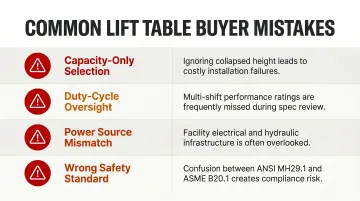
Common buyer mistakes include:
- Selecting a table based on maximum capacity alone without checking collapsed height
- Ignoring duty-cycle rating for multi-shift operations
- Overlooking power source compatibility with facility infrastructure
- Confusing ANSI MH29.1 (the correct standard for scissor lifts) with ASME B20.1 (which applies to conveyors)
Selection Factors Tied to Business Outcomes
Ergonomic design reduces OSHA recordable injuries and workers' compensation costs. Service and parts availability minimizes production downtime — a core pain point for DCs running multiple shifts. Configurability allows the lift table to grow with changing workflows rather than requiring replacement.
Working with a distributor who knows your specific application — not just the catalog spec sheet — makes a measurable difference. John Maye Company's factory-certified technicians and same-day parts availability (2,500+ SKUs, 24-hour ship guarantee) mean that sourcing and servicing the right lift table rarely becomes a production bottleneck.
The "best" lift table is ultimately application-specific: a low-profile model may be ideal for one DC's packing area, while a high-capacity dock lift is the right solution for another's shipping bay. Expert consultation beats catalog selection.
Conclusion
The lift table a distribution center chooses directly affects worker safety, throughput speed, and long-term operating costs. It's a strategic equipment decision with real operational consequences.
Before finalizing a selection, assess your specific DC workflows against these key factors:
- Station type — fixed workstation, mobile, or pit-recessed installation
- Shift frequency — cycle counts per shift and duty cycle requirements
- Load weights — peak versus average load, plus any off-center loading conditions
- Floor constraints — pit availability, floor condition, and available footprint
Prioritize vendors who offer ongoing service, parts availability, and the ability to scale with your operation beyond the initial sale.
If you're sourcing lift tables for a distribution center in Wisconsin, Ohio, or anywhere across the Midwest, John Maye Company's manufacturer-trained team can help identify the right solution for your application. With a 24-hour ship guarantee on parts and a 2,500+ SKU inventory, they're built for minimal downtime. Reach out at info@johnmayecompany.com or 1-800-441-6293.
Frequently Asked Questions
What type of lift table is best for a distribution center?
The best type depends on the specific application. Hydraulic scissor lifts are most common for general DC use, low-profile models (2.9"–4.3" collapsed height) are ideal for cart/pallet jack roll-on, and pallet positioners suit high-volume pick-pack stations. Load weight, lift height, and shift frequency are the key variables.
How much weight can a scissor lift table typically handle in a warehouse or DC?
Capacity ranges from light-duty models at a few hundred pounds to heavy-duty units handling several tons (up to 120,000 lbs for specialized applications). Select a table rated above your maximum expected load to extend equipment life and ensure a safety margin.
What is the difference between a hydraulic and an electric lift table?
Hydraulic models use fluid pressure for powerful, smooth lifting and are common in heavy-duty DC applications. Electric models offer precise height control and quieter operation — battery-powered versions add portability at stations without nearby outlets.
How do lift tables help reduce workplace injuries in distribution centers?
Lift tables eliminate manual lifting by positioning loads at ergonomic working height, reducing bending, overreaching, and repetitive strain. They directly lower the risk of musculoskeletal injuries — the most common and costly in distribution environments, accounting for $13.7 billion annually in overexertion-related costs.
Can lift tables be integrated with conveyor systems in a distribution center?
Yes. Many lift tables feature conveyor-compatible platform heights and optional roller or belt tops that bridge conveyor lines at different elevations. This keeps product moving continuously between stations without manual transfers — essential for throughput in multi-level DC operations.
Should I buy or rent a lift table for my distribution center?
Buying makes sense for permanent, high-use stations where duty-cycle ratings justify the investment. Renting is cost-effective for seasonal volume surges, short-term projects, or facilities testing a configuration before committing to purchase. John Maye Company maintains a rental fleet specifically for Midwest DCs managing seasonal peaks or piloting new station layouts.