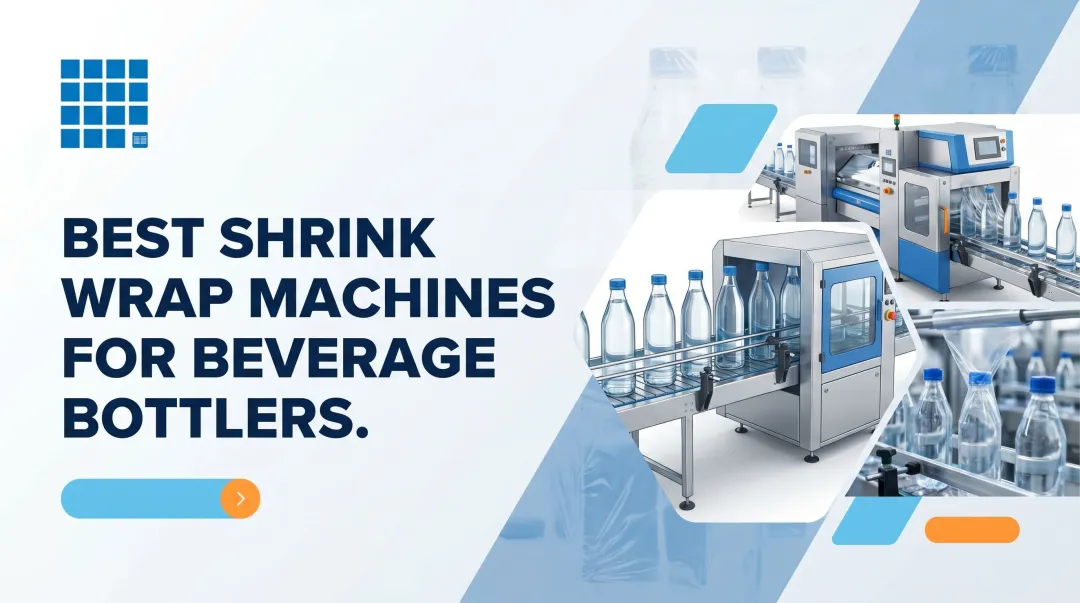

The right shrink film directly affects three core performance metrics: throughput consistency at line speeds exceeding 100 packages per minute, seal integrity under rapid thermal cycling, and product presentation quality. On high-speed automated lines, film must feed consistently through formers and sealing jaws, shrink uniformly without distorting products, and maintain regulatory compliance across thousands of cycles per shift. This guide covers the top shrink film options for high-speed lines, key performance specifications that matter most, and how to match film to your specific equipment and production requirements.
Key Takeaways
- High-speed lines require shrink film with tight gauge control, low coefficient of friction, and reliable seal strength at cycle rates exceeding 100 packages per minute
- Polyolefin (POF) films hold 50-55% of the shrink film market, driven by superior clarity, food-safety compliance, and consistent performance
- Leading brands—Clysar, Bollore, IPG, Berry Global, and Winpak—offer POF films specifically engineered for high-speed applications
- Key selection criteria: gauge consistency (45-75 gauge), balanced shrink ratio, wide sealing window, and ASTM-tested COF values
- Matching film specs to your line speed, sealer type, and product profile cuts reject rates and downtime more than choosing on price alone
Overview of Shrink Film in High-Speed Packaging
Shrink film is a thermoplastic material that conforms tightly around a product when heat is applied, creating a secure, protective package. High-speed packaging lines impose stricter requirements than standard operations: the film must feed consistently at rates of 100-150 packages per minute, seal reliably during short dwell times (often under one second), and shrink uniformly as packages pass through tunnels at conveyor speeds.
ASTM D2732 defines the standard test method for measuring shrink film performance, specifying how films contract when exposed to controlled heat. High-speed lines amplify every film inconsistency—a gauge variation of just a few microns can cause feed jams when multiplied across thousands of cycles per shift.
Film Types for High-Speed Applications
Three primary film types serve automated packaging:
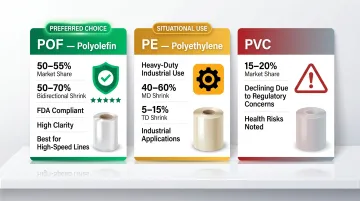
Polyolefin (POF): The dominant choice for modern high-speed lines, POF delivers balanced bidirectional shrink (50-70%), exceptional clarity, and FDA compliance under 21 CFR 177.1520. The global POF market was valued at $6.1 billion in 2023 and is projected to reach $9.7 billion by 2032—driven largely by food-contact and automated packaging demand.
Polyethylene (PE): LDPE bundling films suit heavy-duty applications—beverage multipacks, construction materials, industrial unitizing. PE typically runs in heavier gauges (60-150+) with strong machine-direction shrink (40-60%) and minimal transverse shrink (5-15%), favoring function over retail presentation.
PVC: Now roughly 15-20% of the market, PVC has declined due to health and regulatory concerns. A NIOSH evaluation found 72% of heat-sealing workers reported symptoms (headaches, dizziness, respiratory issues) when using PVC film; that figure dropped to 33% after switching away from it.
For most high-speed automated lines, POF is the practical default—it handles regulatory requirements, worker safety, and feed consistency without tradeoffs. PE and PVC remain relevant for specific applications, but the performance gap widens as line speeds increase.
Best Shrink Films for High-Speed Packaging Lines
These films are selected based on documented high-speed line compatibility, published seal performance data, gauge consistency across production runs, and broad adoption in food, beverage, pharmaceutical, and manufacturing sectors.
Clysar (by Sealed Air)
Clysar stands as one of the most widely specified POF brands for automated packaging lines across North America. Manufactured exclusively in the United States since 1963, Clysar positions itself as "the industry's only shrink film manufacturer that focuses exclusively on shrink packaging," bringing specialized expertise to high-speed applications.
Standout performance characteristics include:
- Phoenix line achieves haze values of 2.5-2.7% and gloss ratings of 143-148 per ASTM standards — among the highest clarity specs in the POF category
- Wide sealing temperature windows reduce sensitivity to heat fluctuations at high cycle rates
- Kinetic coefficient of friction of 0.23-0.24 ensures smooth feeding through automated formers
Clysar's EZ-R and EZ Gold films are specifically rated for speeds exceeding 100 packages per minute, with documented performance across L-bar sealers, side-seal systems, and continuous-motion equipment. All Clysar films carry FDA compliance under 21 CFR 177.1520 for direct food contact.
| Specification | Details |
|---|---|
| Material/Construction | Cross-linked biaxially oriented polyolefin; available in centerfold and single-wound formats |
| Gauge Range | 35-300 gauge (core high-speed range: 45-75 gauge) |
| Shrink Performance | 45-50% area shrink at 90°C; shrink force 65-70g at 100°C depending on gauge |
| Optical Properties | Haze: 2.5-2.7%; Gloss: 143-148 (ASTM D2457); superior retail presentation |
| Sealing Range | Wide temperature window; minimal cooling dwell time required |
| Best Applications | Multipacks, food retail, pharmaceuticals, printed film applications requiring high clarity |
Sigma/Bollore Flexipack
Bollore manufactures its Bolphane line of multilayer polyolefin shrink films from Dayville, Connecticut, with ISO 9001 and FSSC 22000 certifications. The European-origin engineering approach emphasizes precision manufacturing tolerances — critical for consistent performance on demanding high-speed automated lines.
Bollore films are engineered for extreme gauge uniformity, which directly impacts feed reliability at high speeds. Key advantages:
- BRX and BCL cross-linked grades offer low activation temperatures, reducing energy load on shrink tunnels
- High puncture resistance handles sharp-edged or irregular products without film failure
- B30 grade at just 30 gauge is the thinnest available POF option for lightweight, source-reduced packaging
The company positions its polyolefin range as "ultra-thin yet perfectly resistant and adapted to high-speed machines", designed to seal and shrink quickly at low temperatures — advantages that translate directly to higher throughput and lower operating costs.
| Specification | Details |
|---|---|
| Material/Construction | Biaxially oriented polyolefin; multiple grades including cross-linked (BRX, BCL) and standard (BX, BY) |
| Gauge Range | 30-150 gauge; core high-speed grades available in 40-75 gauge |
| Shrink Performance | Balanced bidirectional shrink; high free shrink values; low activation temperature |
| Special Features | Exceptional gauge uniformity; low temperature seal and shrink; high stiffness and flatness for BX grade |
| Best Applications | High-speed retail bundling, fragrance/cosmetics, irregular-profile products, thin packages, heat-sensitive items |
Intertape Polymer Group (IPG) Shrink Film
IPG has manufactured polyolefin shrink film since 1993, with production facilities in the United States and Portugal. In January 2022, IPG expanded North American capacity with a new film plant in North Carolina, strengthening its position as a major regional supplier with broad distribution reach.
IPG offers both cross-linked (Exlfilm plus) and non-cross-linked (Exlfilm) product lines, covering a wide range of performance and price points:
- Extensive North American distribution network supports rapid delivery — critical for operations that can't absorb film stockouts
- Consistent lay-flat dimensions reduce jam frequency on automated feeders
- Exlfilm plus 365 spans 45-200 gauge in a single product line, simplifying sourcing across multi-SKU facilities
Exlfilm 307, a non-cross-linked multilayer film, is specifically designed for high-speed static lap and wire sealing systems, demonstrating IPG's focus on application-specific engineering.
| Specification | Details |
|---|---|
| Material/Construction | Polyolefin available in both cross-linked and non-cross-linked options; centerfold and single-wound |
| Gauge Range | 35-200 gauge; Exlfilm plus 365 offers widest range (45-200) in single product line |
| Shrink Performance | 65-72% balanced MD/TD shrink (Exlfilm plus GPL); 62% balanced (Exlfilm 307) |
| Special Features | PCR options available (20% post-consumer recycled content, up to 50% total recycled); FDA-compliant grades |
| Best Applications | General manufacturing, e-commerce fulfillment, multi-SKU production lines with frequent changeovers |
Berry Global (Pliant) Shrink Film
Berry Global's Pliant brand operates as the company's Specialty Films Division following Berry's acquisition of Pliant Corporation in 2009. Pliant manufactures both polyolefin and polyethylene shrink films for industrial and retail packaging, with specific product lines optimized for high-output automated equipment.
Berry Global excels in heavy-duty and large-format applications where thinner films lack sufficient abuse resistance. The dual POF/PE portfolio gives procurement teams flexibility to match material cost to application requirements:
- High-clarity retail POF films for consumer-facing packaging
- Economical PE options for industrial bundling and unitizing
- PCR content from 10-70% addresses sustainability mandates without sacrificing run consistency
LDPE shrink bundling films run in gauges from 1.0 to 4.0 mils with machine direction shrink of 40-60% — ideal for heavy or bulky products that would distort under high-shrink-force POF films.
| Specification | Details |
|---|---|
| Material/Construction | POF and LLDPE/PE options; available in centerfold; custom widths available through large-scale manufacturing |
| Gauge Range | POF: 45-75 gauge standard; PE: 60-150 gauge (1.0-4.0 mil) |
| Shrink Performance | PE: 40-60% MD, 5-15% TD; POF: balanced bidirectional shrink |
| Special Features | PCR content up to 70%; printed film with full creative services; CoverGuard film-over-film bundling |
| Best Applications | Industrial bundling, beverage multipacks, heavy consumer goods, warehouse-scale operations |
Winpak Shrink Film
Winpak is a specialty packaging manufacturer with strong presence in food-grade and pharmaceutical applications. The company offers high-performance barrier and non-barrier POF films suited for regulated high-speed lines where compliance documentation and lot traceability are essential.
Winpak's portfolio centers on barrier shrink bags and shrink lidding for protein packaging — a different category from roll-stock POF suppliers, but highly relevant for meat, poultry, cheese, and pre-made meal applications.
DuraShrink barrier shrink bags and shrink lidding deliver strong retail clarity combined with the seal reliability required on continuous-motion MAP (modified atmosphere packaging) equipment. Winpak stands out for food safety compliance, with extensive FDA and USDA approvals and tight thickness tolerances that prevent machine jams during long production runs.
| Specification | Details |
|---|---|
| Material/Construction | Polyolefin barrier and non-barrier variants; DuraShrink bags, shrink lidding (1-2 mil) |
| Gauge Range | 1 mil (non-printed) and 2 mil (printed) lidding; bag wall thickness optimized per application |
| Shrink Performance | Balanced high shrink rate with controlled low shrink force for wrinkle-free packages |
| Special Features | EVOH barrier maintains oxygen and moisture barrier through shrinkage; anti-fog performance; food-contact certified |
| Best Applications | Fresh meat, poultry, cheese, pre-made meals, pharmaceutical packaging requiring FDA-compliant film |
Key Performance Specs That Matter on High-Speed Lines
Gauge Consistency and Tolerance
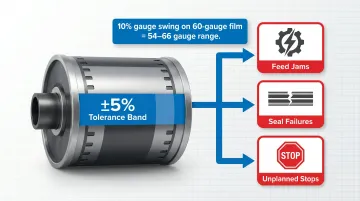
Gauge uniformity is the single most critical film specification for high-speed automated packaging. Inconsistent gauge causes three failure modes:
- Feed jams — thickness variations prevent smooth travel through guides and formers
- Seal failures — thin spots don't absorb enough heat to form a reliable bond
- Unplanned stops — thick spots trigger jam sensors or cause film tracking errors
High-performance films maintain gauge tolerances within ±5% or tighter across and along the roll. At 100+ packages per minute, even minor variations add up fast—a 10% gauge swing on a 60-gauge film means some areas run effectively at 54 gauge while others hit 66 gauge, creating inconsistent seal windows and shrink behavior. Leading manufacturers like Clysar publish specific gauge control data, with Phoenix films delivering haze values of 2.5-2.7% that reflect manufacturing precision.
Industrial packaging specialists report that ordering film width in 1/4" or 1/8" increments rather than rounding up to full inches can yield approximately 5% cost savings—but only if gauge consistency eliminates the waste from reject packages.
Shrink Ratio and Force
Shrink percentage measures how much the film contracts—typically 45-72% in both machine and transverse directions for high-performance POF. Shrink force measures how hard the film pulls during contraction.
High shrink ratios with controlled force are preferred on fast lines because they deliver tight, wrinkle-free packages without distorting products or crushing lightweight items.
ASTM D2732 standardizes free shrink measurement using 100 x 100 mm specimens immersed in constant-temperature baths, while ASTM D2838 measures shrink tension and force under restraint. Cross-linked POF films typically achieve 65-72% balanced shrink (both MD and TD) compared to 45-50% for standard POF, making cross-linked films more suitable for irregular shapes or tight-fitting applications.
Unbalanced shrink—where machine direction significantly exceeds transverse direction, common in PE films (40-60% MD vs. 5-15% TD)—creates packaging distortion at high speeds unless product and film orientation are precisely controlled.
Sealing Temperature Window
A wide sealing temperature range gives sealers more tolerance at high cycle speeds, reducing sensitivity to minor temperature fluctuations that cause incomplete seals or film burn-through. On high-speed lines, sealer dwell time often drops below one second—creating narrow process windows where temperature precision becomes critical.
Clysar films note "wide sealing range" with "little or no cooling dwell time required," meaning packages exit the sealer ready for immediate tunnel entry. Bollore emphasizes "low temperature seal and shrink," reducing energy consumption and the risk of heat damage to temperature-sensitive products.
These characteristics directly set your throughput ceiling: a film requiring 340°F and extended cooling limits cycle rates, while films sealing reliably at 250-300°F keep the line moving.
Coefficient of Friction (COF)
Film surface friction affects how smoothly material feeds through automated formers, sealing jaws, and film delivery systems. ASTM D1894 measures both static and kinetic COF by dragging a weighted sled across film surfaces.
Lower COF (0.20-0.30 kinetic) generally improves feed reliability at high speeds, preventing film from sticking to guides or forming pockets that cause jams. Clysar Phoenix data sheets report kinetic COF of 0.23-0.24—values optimized for automated equipment. However, applications involving stacked packages or inclined conveyors may require higher COF to prevent slippage during accumulation and case packing.
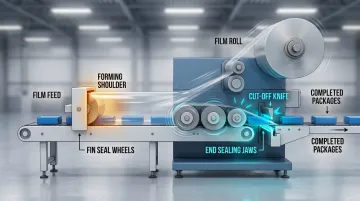
Confirm your equipment manufacturer's COF specifications before finalizing film selection—what runs cleanly at 60 packages per minute can jam consistently at 120.
How We Chose the Best Shrink Films
This selection prioritizes specifications relevant to high-speed line performance: documented gauge consistency, published seal reliability data across temperature ranges, proven compatibility with L-bar, side-seal, and continuous-motion equipment, FDA compliance for food and pharmaceutical applications, and field-proven performance in manufacturing environments. Generic retail-grade films lacking published ASTM test data or high-speed equipment validation were excluded.
Common Film Selection Mistakes
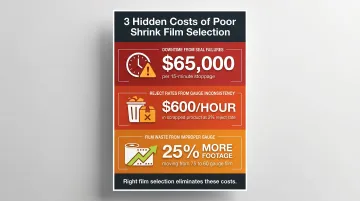
Buyers frequently select shrink film based on price-per-roll without accounting for total cost of ownership. Three hidden costs overwhelm material savings:
Downtime from seal failures and jams: At $260,000 per hour for unplanned downtime, a single 15-minute stoppage from film-related issues costs $65,000—enough to cover the price difference between economy and premium film for months of production.
Reject rates from inconsistent gauge or shrink: A 2% reject rate on a line running 100 packages per minute wastes 120 packages per hour. If package value is $5, that's $600/hour in scrapped product—$4,800 per eight-hour shift.
Film waste from improper gauge: Thinner films provide more linear footage per roll, reducing changeover frequency. Moving from 75-gauge to 60-gauge film can increase footage by 25%, cutting changeovers from 12 to 9 per shift and reclaiming production time.
Clysar's PACE evaluation methodology identifies cost reduction opportunities of 10-30% across film selection and packaging operations when total cost replaces material cost as the decision metric.
Matching Film and Equipment for Success
Film performance depends on proper equipment pairing. Three variables must align:
- Shrink tunnels need uniform heat distribution across your film's required temperature range
- Sealers need jaw pressure and dwell time compatible with your film's sealing window
- Conveyor speeds must match your tunnel's heat capacity for complete shrink at target throughput
Working with an experienced packaging distributor ensures film and machine specifications align before production begins. John Maye Company, based in Waukesha, Wisconsin, has sourced and integrated shrink tunnels, L-bar sealers, side-seal systems, and compatible POF films for Midwest manufacturers since 1983.
Their factory-certified technicians conduct line assessments to verify that film gauge, sealing temperature requirements, and shrink performance match your equipment configuration and throughput targets—removing guesswork from the sourcing process.
Conclusion
The best shrink film for a high-speed packaging line isn't a universal answer—it depends on line speed, product profile, sealer type, regulatory requirements, and throughput targets. The films profiled here represent the strongest options across these variables, with documented performance data and broad industry adoption validating their high-speed capabilities.
Rather than relying solely on data sheets, run controlled trials on your actual equipment before committing. When evaluating candidates, look beyond initial package quality and assess:
- Consistency across extended production runs
- Reject rates under normal operating conditions
- Operator troubleshooting ease when issues arise
- Roll-to-roll consistency across orders
- Supplier support responsiveness and sourcing reliability
John Maye Company has been matching Midwest manufacturers with the right shrink film and packaging equipment since 1983. Their specialists can help you evaluate film specs against your equipment configuration and production targets—before a wrong choice costs you in downtime or rejects. Call 1-800-441-6293 or email info@johnmayecompany.com to get started.
Frequently Asked Questions
Frequently Asked Questions
Can Clysar be used in high-speed packaging?
Yes, Clysar is specifically engineered for high-speed automated packaging lines. The EZ-R and EZ Gold product lines are rated for speeds exceeding 100 packages per minute, with wide sealing temperature windows and tight gauge control that deliver reliable performance at high cycle rates.
What is Clysar film used for?
Clysar is a polyolefin shrink film used for wrapping individual products and multipacks across food, pharmaceutical, and consumer goods industries. It's the go-to choice where clarity, seal strength, and FDA compliance for direct food contact are non-negotiable.
Is Clysar FDA approved?
Yes, Clysar films comply with FDA regulation 21 CFR 177.1520 for direct food contact applications. For compliance details on specific product grades, consult Sealed Air's official product documentation or contact your distributor directly.
Is shrink wrap and shrink film the same thing?
The terms are often used interchangeably, but "shrink film" typically refers to thinner, machine-grade material (35-150 gauge) used on automated packaging lines, while "shrink wrap" can also describe heavier-gauge hand-applied material used for pallet wrapping or equipment protection.
What gauge shrink film is best for high-speed packaging lines?
45-75 gauge polyolefin film represents the most common range for high-speed automated lines. Thinner gauges (45-60) suit lighter consumer products with minimal sharp edges, while heavier gauges handle products requiring greater puncture resistance or abuse protection during distribution.
What is the difference between POF and PVC shrink film?
POF (polyolefin) is flexible, FDA-compliant for food contact under 21 CFR 177.1520, and produces minimal emissions during sealing — making it the standard choice for high-speed food and retail lines. PVC costs less upfront but generates chlorine-based fumes, carries more restrictive food-contact approvals (21 CFR 177.1950/1980), and faces growing regulatory restrictions in modern automated environments.